
Starved Rock State Park, near Utica in LaSalle County, is the most popular day trip into nature from Chicago, and for good reason. Less than 100 miles southwest of the city, it has sandstone bluffs along the Illinois River and 18 canyons cut into the rock, many with seasonal waterfalls. The park is managed by the Illinois Department of Natural Resources. This guide explains which trails to choose, when the waterfalls are best and how to avoid the worst of the crowds.
Key takeaways
- The park has 18 canyons and about 13 miles of marked trails, open year-round.
- Waterfalls are strongest in early spring and after heavy rain; in winter some freeze into ice falls.
- Weekend crowds and parking are the biggest challenge. Arrive early.
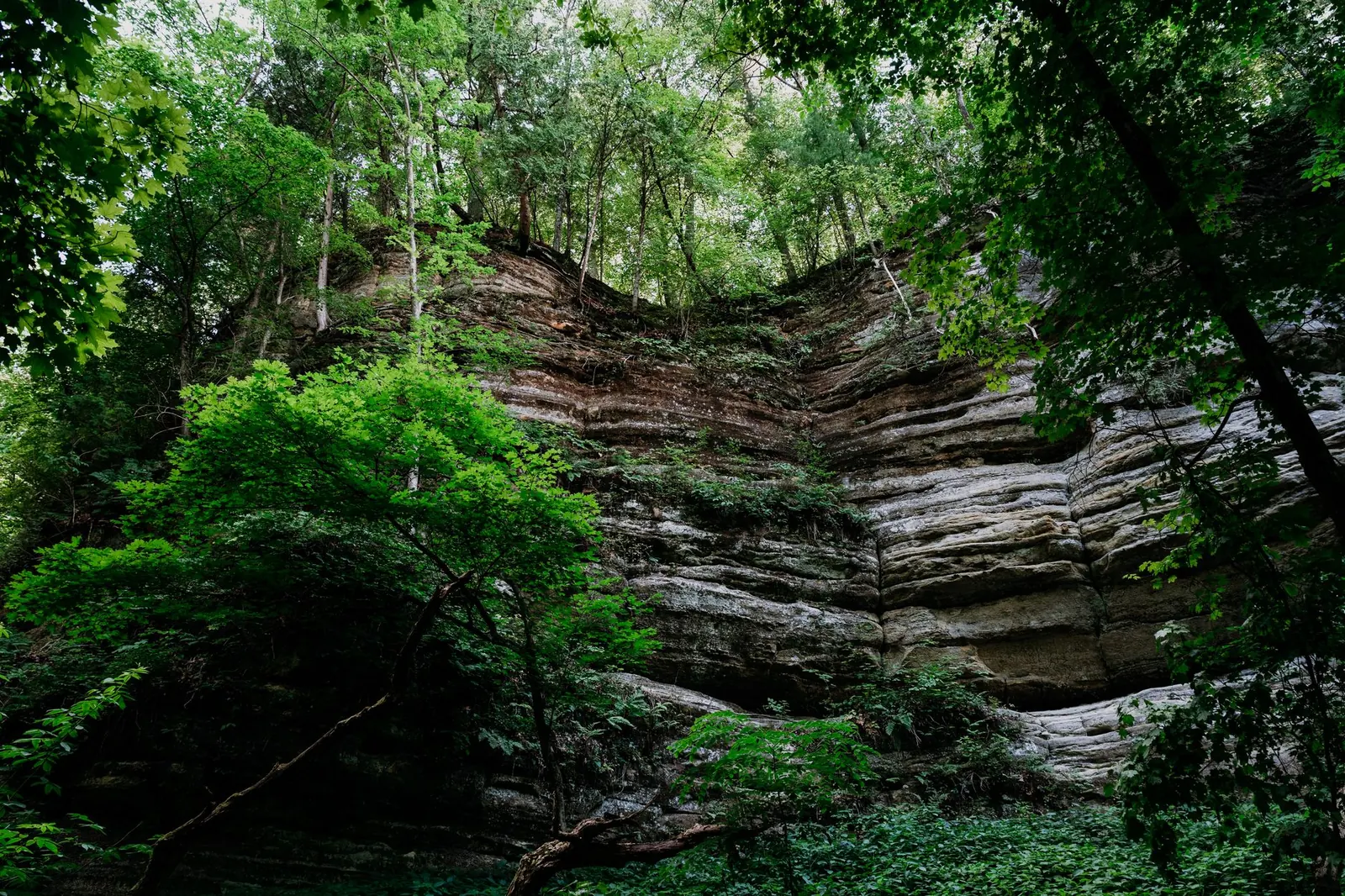
What makes Starved Rock special
Most of northern Illinois is flat, which is what makes Starved Rock feel so surprising. Streams have carved narrow canyons into the sandstone, with ferns and moss on the walls and waterfalls at their heads. From the tops of the bluffs, overlooks give wide views over the Illinois River. The park’s name comes from a legend about a group of Native Americans said to have been besieged on top of the main rock.
The canyons and trails
The trail system runs along the river and up into the canyons. Some of the most visited canyons, with waterfalls that tend to last longer, are French Canyon, LaSalle Canyon and St. Louis Canyon. French Canyon is close to the visitor center and makes a good short first stop. LaSalle Canyon lets you walk behind the falls when water is flowing. St. Louis Canyon has one of the tallest falls and its own parking area.
Trails include stairs, boardwalks, dirt paths and some steep sections. The IDNR urges visitors to stay on official trails and to be careful near cliff edges, which can be unstable and slippery.
When to go
| Season | What to expect | Notes |
|---|---|---|
| Early spring | Strongest waterfalls from snowmelt | Trails can be muddy |
| Late spring and summer | Green canyons; waterfalls fade in dry spells | Busiest weekends |
| Fall | Colorful bluffs, comfortable hiking | Very popular in October |
| Winter | Frozen waterfalls, fewer people | Icy trails; traction aids recommended |
Tip: The waterfalls depend on water. If it has been dry for weeks, some canyons will have only a trickle. The best time is a day or two after a good rain.
Suggested day plan
Arrive in the morning and start at the visitor center for a map and trail updates. Walk to Starved Rock itself and a nearby overlook, then head east along the trail to French Canyon, Wildcat Canyon and LaSalle Canyon. That route covers several of the park’s best sights in a few hours. If you still have energy, drive to the St. Louis Canyon parking area for a shorter walk to its falls.
Nearby: Matthiessen State Park
A few miles south, Matthiessen State Park has its own canyon, waterfalls and trails, usually with fewer visitors. If Starved Rock is crowded, it is a good alternative, or a second stop on the same trip.
Who this trip suits
- Hikers of most levels, since trails range from short and easy to longer and steeper.
- Families with school-age children who can handle stairs.
- Photographers, especially in spring and winter.
Before you go
- Check the IDNR website for trail closures, especially after storms or in icy weather.
- Arrive early on weekends; parking lots fill and can close.
- Wear sturdy shoes; trails can be muddy, rocky or icy.
- Bring water and snacks; the drive is about two hours each way from downtown.
Visiting with children
Starved Rock is a good first hiking trip for children who can handle stairs. The walk from the visitor center to French Canyon is short, and the canyon feels like a small adventure. Keep children close near the bluffs, where drop-offs are steep and unfenced in places. Bring snacks and water, and plan a picnic in one of the park’s picnic areas. A shorter visit that ends on a good note is better than a long hike that ends in tears.
Common mistakes
The most common mistake is visiting on a sunny summer Saturday at midday and spending the first hour looking for parking. The second is expecting big waterfalls in a dry August. The third is leaving the marked trails to get closer to cliff edges, which is dangerous and prohibited.
Frequently asked questions
How far is Starved Rock from Chicago?
Less than 100 miles southwest of the city, usually about two hours by car depending on traffic.
Is there an entrance fee?
Illinois state parks have generally not charged a general entrance fee, but fees and rules can change. Check the IDNR website before you go.
When are the waterfalls best?
In early spring and after heavy rain. In winter, some falls freeze and are worth seeing too.
For another scenic trip, compare the Indiana Dunes: National Park vs. State Park. Starved Rock is also one of our picks in Where to See Fall Colors Near Chicago.