
Chicago has more than two dozen public beaches along about 26 miles of Lake Michigan shoreline, all run by the Chicago Park District. They range from busy, social beaches downtown to quieter neighborhood beaches on the North and South Sides. Picking the right one depends on what you want from the day: people-watching, a calm swim, space for kids or a quick trip after work. This guide explains the differences and the rules that apply everywhere.
Key takeaways
- Swim season runs from the Friday before Memorial Day through Labor Day, with lifeguards on duty 11 a.m. to 7 p.m.
- A flag system shows conditions: green means swimming is allowed, yellow means caution, red means no swimming.
- Alcohol and dogs are not allowed on park district beaches.
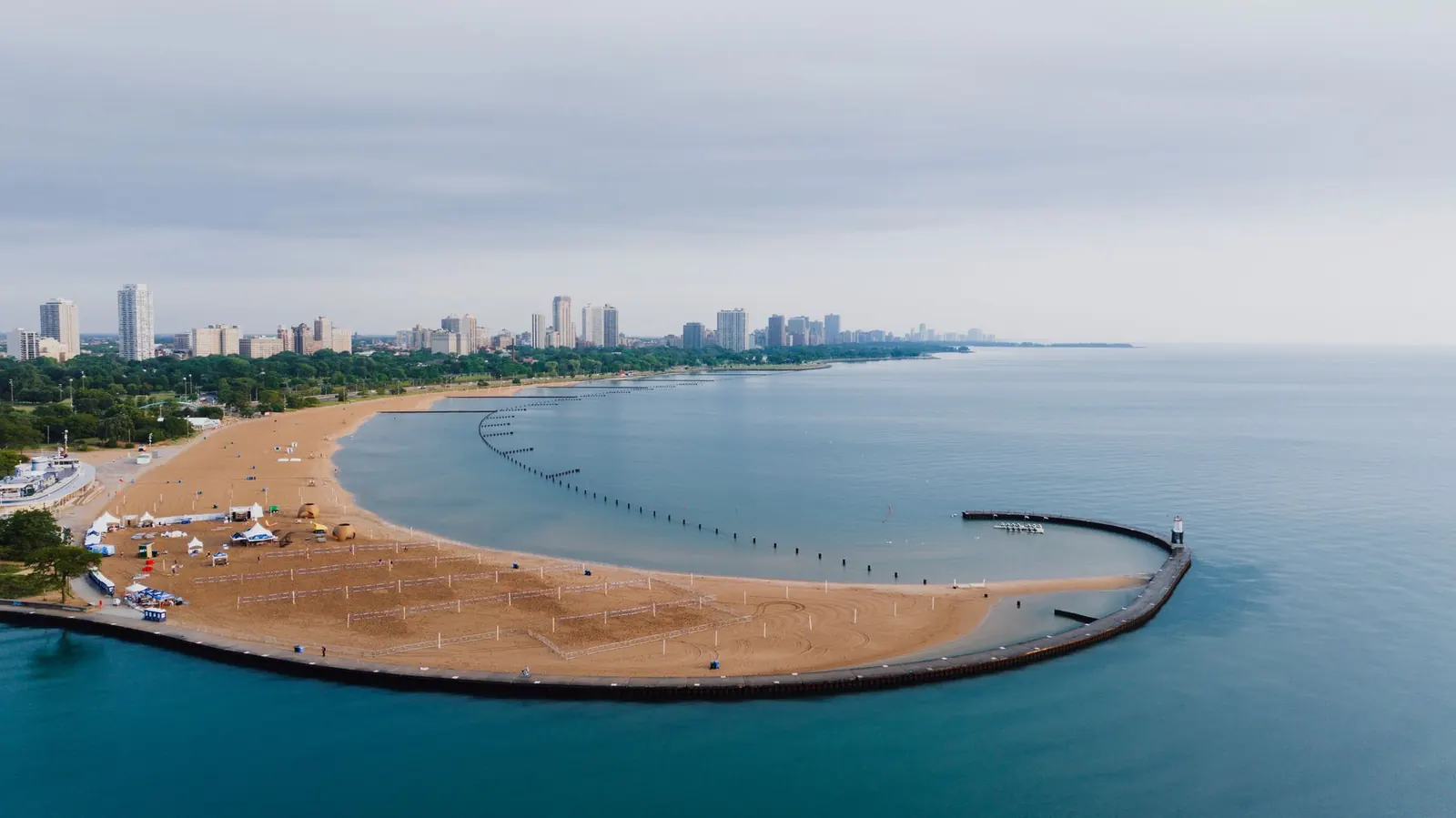
Busy downtown beaches
North Avenue Beach and Oak Street Beach are the best known. They sit close to downtown, have skyline views and fill up on warm weekends. North Avenue is the more active of the two, with volleyball courts and a large beach house. Oak Street is smaller and sits right next to the Gold Coast. These are good choices if you want energy and are happy with crowds, less so if you want a quiet swim.
Neighborhood beaches on the North Side
Further north, beaches such as Montrose, Foster, Loyola, Hollywood and the smaller ones in Rogers Park have a local feel. Montrose is large, with a harbor, a natural dune area and a bird sanctuary nearby; it is also one of only two beaches where surfing is permitted in season. Foster and Loyola are popular with families from the surrounding neighborhoods. Smaller street-end beaches in Rogers Park are often the calmest option on a busy day.
South Side beaches
On the South Side, 12th Street Beach sits near the Museum Campus and Northerly Island, and 31st Street Beach is next to a large harbor. The 57th Street Beach and 63rd Street Beach serve Hyde Park and Woodlawn; 63rd Street has a historic beach house. Rainbow Beach and Calumet Beach are further south. These beaches are often less crowded than downtown and pair well with a visit to Jackson Park or the Museum Campus.
Beach types compared
| Downtown beaches | North Side neighborhood beaches | South Side beaches | |
|---|---|---|---|
| Crowds on summer weekends | Heavy | Moderate | Light to moderate |
| Skyline views | Close-up | Distant | Wide views from the south |
| Best for | Social days, volleyball | Families, quieter swims | Space, pairing with parks and museums |
| Examples | North Avenue, Oak Street | Montrose, Foster, Loyola | 12th Street, 63rd Street, Rainbow |
The rules that apply everywhere
The park district sets the same basic rules for all its beaches. Swimming is allowed only in designated areas while lifeguards are on duty. Only Coast Guard-approved flotation devices are permitted. Alcohol is not allowed, and dogs are not allowed on the beaches themselves; dog-friendly areas are separate and have their own rules. Private swim lessons and coaching on the beach are also prohibited.
Pay attention to the flags. Green means swimming is permitted. Yellow means an advisory is in place, often because of waves or water quality, and you should swim with caution. Red means a swim ban is in place and no one should enter the water. Lake Michigan can produce dangerous currents, especially near piers and breakwalls, even when the weather looks calm.
Tip: Check the park district’s beach page on the morning you plan to go. Swim advisories and bans are posted there, and conditions can differ from one beach to the next on the same day.
Which beach fits your day
Go downtown if
- You want a lively scene and skyline views.
- You are meeting friends or combining the beach with a downtown outing.
Go to a North Side neighborhood beach if
- You have young kids and want more space.
- You would rather swim than people-watch.
- You want to add a walk through the Montrose bird sanctuary.
Go south if
- You want room to spread out on a busy weekend.
- You are visiting the Museum Campus, Hyde Park or Jackson Park the same day.
Before you go
- Lake water is often cold early in the season. Expect it to feel cool until midsummer.
- Bring shade: many beaches have little natural cover.
- Parking near popular beaches fills early on hot days. Transit or a bike is often easier.
- Pack out what you bring. Trash cans fill quickly on busy days.
Common mistakes
The most common mistake is swimming outside lifeguard hours or on a red-flag day because the water looks calm. The second is forgetting how quickly weather changes on the lake: a sunny morning can turn into strong wind and waves by afternoon. Keep an eye on the flags through the day, not only when you arrive.
Frequently asked questions
When is Chicago beach season?
Swim season runs from the Friday before Memorial Day through Labor Day. Outside those dates beaches are open for walking, but there are no lifeguards and swimming is not permitted.
Can I bring my dog to the beach?
Not onto park district beaches. The city has separate dog-friendly areas, some of them on the lakefront, with their own rules and permits.
Is surfing allowed?
In season, surfing is allowed only at Montrose and 57th Street beaches, according to the park district.
Most beaches sit right on the path described in our The Chicago Lakefront Trail, Section by Section. On a hot day when the lake is closed, the Garfield Park Conservatory vs. Lincoln Park Conservatory are a good indoor alternative.