
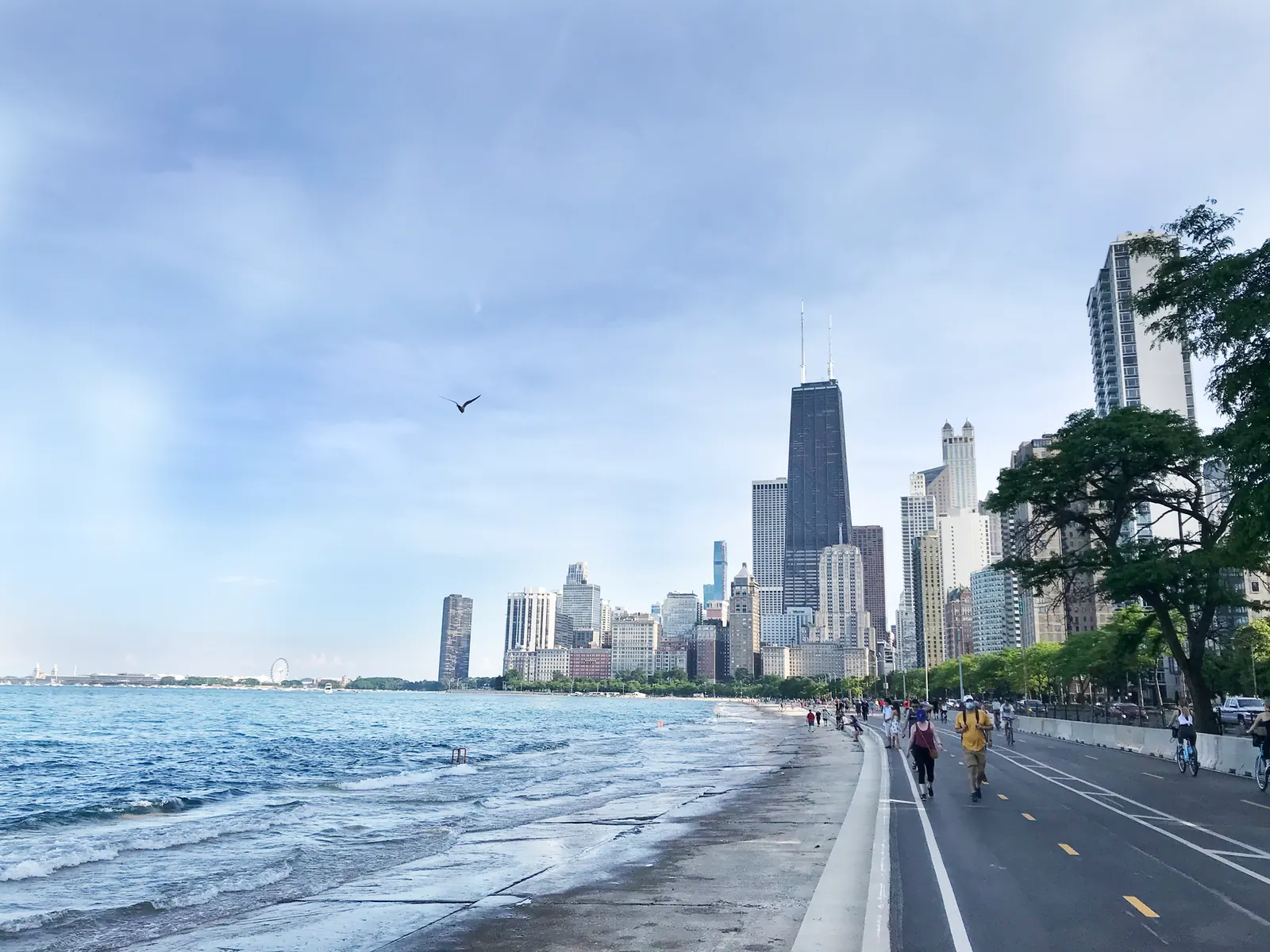
The Lakefront Trail runs along Lake Michigan from Ardmore Avenue on the North Side to 71st Street on the South Side. Since 2018 it has been split into two paths: an 18-mile bike trail and an 18.5-mile pedestrian trail, so walkers and runners no longer share the same strip of asphalt with cyclists on most of the route. Very few people cover the whole thing in one go. Most choose a section that fits the day, and each section has a different feel.
Key takeaways
- The trail runs from Ardmore Avenue to 71st Street, with separate bike and pedestrian paths on most of the route.
- The north end is quieter and residential; the downtown stretch is busy and full of landmarks; the south end has wide parks and long views.
- Weekday mornings are the calmest time; summer weekend afternoons downtown are the busiest.
How the trail is laid out
The trail passes through a chain of lakefront parks: Lincoln Park on the North Side, Grant Park downtown, then Burnham Park and Jackson Park to the south. Beaches, harbors, playgrounds and fieldhouses sit right next to the path, so it is easy to turn a walk into a longer outing. The Chicago Park District publishes trail maps by segment and posts notices about repair work, which usually moves one stretch at a time while the rest stays open.
Look for the painted symbols on the pavement. They show which path is for bikes and which is for people on foot, and the park district asks everyone to learn them before heading out. Where the two paths come together, usually at narrow points and underpasses, slow down and keep right.
The north section: Ardmore to North Avenue
The northern stretch is the most residential. It passes Hollywood and Foster beaches, the Montrose Harbor area and the long green lawns of Lincoln Park. It is a good choice for a relaxed walk or an easy family ride. Montrose Point, with its bird sanctuary and the shrubby area locals call the Magic Hedge, makes a good stop in spring and fall migration. Further south, the trail runs past the harbors near Belmont and Diversey before reaching North Avenue Beach.
Downtown: North Avenue to the Museum Campus
The central section is the one people picture: Oak Street Beach, the curve of Lake Shore Drive, Navy Pier, the mouth of the Chicago River and the harbor in front of Grant Park. It is spectacular and it is busy. On warm weekends expect crowds of walkers, runners, tourists on rental bikes and people stopping for photos. If you want to ride fast, this is not the place to do it. If you want the skyline, go early in the morning, when the light is good and the path is quiet.
South: the Museum Campus to 71st Street
South of the Museum Campus the trail opens up. It passes Northerly Island, the 31st Street Harbor, Promontory Point in Hyde Park and Jackson Park, where the Garden of the Phoenix sits on Wooded Island. The views back toward downtown from Promontory Point are some of the best in the city. This section is usually less crowded than downtown, which makes it good for longer rides and runs.
Sections compared
| North (Ardmore to North Ave) | Downtown (North Ave to Museum Campus) | South (Museum Campus to 71st St) | |
|---|---|---|---|
| Feel | Residential, green, relaxed | Busy, urban, iconic views | Open parks, long views |
| Best for | Family walks, easy rides, birding | Skyline photos, short walks | Longer rides and runs |
| Crowds on summer weekends | Moderate | Heavy | Light to moderate |
| Good stops | Montrose Point, Lincoln Park | Oak Street Beach, Navy Pier | Promontory Point, Jackson Park |
Tip: Pick a one-way stretch and take the train or bus back. Several CTA lines run parallel to the lakefront a short walk inland, so you can cover a longer section without doubling back.
Which section fits your day
Choose the north section if
- You are walking with kids or a stroller.
- You want beaches and lawns without the downtown crowds.
- You are interested in birds during migration.
Choose downtown if
- You want the famous skyline views.
- You are combining the walk with Millennium Park or the Museum Campus.
- You can go early in the morning.
Choose the south section if
- You want a longer ride or run with fewer interruptions.
- You plan to visit Hyde Park or Jackson Park.
- You like wide, open views of the lake.
Before you go
- Check the park district’s trail page for repair notices and closures.
- Wind off the lake can be much colder than inland. Bring a layer even in summer.
- There is little shade on many stretches. Carry water and sun protection.
- After storms, waves can wash over low sections of the path. Stay back from the edge.
Common mistakes
The most common mistake is walking on the bike path, or riding on the pedestrian path, where the two are separate. The second is underestimating distance: the trail is long, and a ride that feels easy with the wind behind you can feel much harder on the way back into it. Plan the return leg before you start.
Frequently asked questions
How long is the Lakefront Trail?
According to the Chicago Park District, the bike trail is 18 miles and the pedestrian trail is 18.5 miles, running from Ardmore Avenue to 71st Street.
Can you rent a bike on the trail?
Yes. Bike-share stations are located near many trail access points, and there are seasonal rental stands in the busier areas. Check current options before you go.
Is the trail open in winter?
The trail is used all year, but snow and ice clearing varies by section. In winter, expect some icy patches and strong wind.
If a beach day is part of the plan, read our Chicago Beaches: How to Choose One and What to Know Before You Swim before you go. Downtown, the trail passes close to the parks covered in Millennium Park and Maggie Daley Park: One Walk, Two Very Different Parks.